




Interior design is full of rules. Hang curtains high. Keep patterns balanced. Match your window treatments. Use neutral colors if you want a timeless room. Choose one focal point and let everything else recede.
And while most of these guidelines exist for good reason, great interiors are rarely created by following a checklist too literally. Designers understand that a rule is useful only when it serves the architecture, the room, and the people living in it. Sometimes the most successful window treatment is the one that deliberately ignores conventional advice.
That does not mean throwing every principle out the window. It means understanding why a rule exists before deciding whether your room actually needs it.
From mixing patterns to using dark fabrics and breaking symmetry, here are some of the window treatment rules designers are perfectly happy to bend.
Rule #1: Curtains Should Always Be Neutral
Neutral curtains are undeniably versatile. Ivory, beige, white, taupe, and soft gray can work with an enormous range of interiors, which makes them a sensible choice when you want the window treatment to blend quietly into the background.
But neutral is not synonymous with sophisticated, and colorful curtains are not automatically overwhelming. In a room with relatively restrained walls and furnishings, a beautifully chosen fabric can give the windows the personality the space is missing.
Patterned curtains are particularly effective when the rest of the room provides enough visual breathing room. A botanical print can soften a contemporary space, while a geometric motif can give a traditional room a more current edge. The trick is to make sure the pattern relates to colors already present elsewhere rather than introducing an entirely disconnected palette.
Designers also use deeper shades such as olive, rust, navy, charcoal, and chocolate brown to create contrast. When the architecture and furnishings are relatively simple, a darker curtain can actually make the room feel richer rather than smaller.
Rule #2: Every Window in a Room Should Match
Matching window treatments can certainly create a polished appearance, particularly when several windows sit side by side. But treating every opening identically is not always the best solution.
Windows differ in size, position, function, and architectural character. A large living room window might benefit from full-length drapery, while a smaller nearby window could be better suited to a roman shade. A kitchen window may need a practical treatment that would look out of place in the dining area.
The key is to coordinate rather than duplicate.
You might use the same color family throughout the room while varying the treatment style. A linen curtain in the living area could be echoed by a textured roman shade in the kitchen. The treatments are different, but their shared palette and materials create a visual connection.
This is one of the advantages of custom roman shades and custom curtains. Rather than forcing different windows into the same treatment, you can tailor each one to its architecture while maintaining a cohesive design language.
Rule #3: You Should Never Mix Patterns at the Window
Pattern mixing can be intimidating because windows already occupy a large amount of visual space. But when patterns are chosen according to scale and color rather than simply thrown together, the result can feel sophisticated and layered.
The most reliable approach is to vary the scale. A large botanical curtain, for example, can work with a small geometric motif on a nearby roman shade. A broad stripe can sit comfortably alongside a fine check because the patterns have different visual weights.
Color provides another point of connection. The patterns do not need to match, but repeating one or two colors across them can create cohesion.
The important thing is to establish a hierarchy. If two patterns are equally bold, the window can become visually noisy. Give one pattern the leading role and allow the other to act as supporting detail.
Rule #4: You Should Always Hang Curtains as High as Possible
This is one of those rules that is generally helpful but should not be followed blindly.
Mounting curtains higher can make ceilings appear taller and give windows a more generous presence. It is especially effective in rooms with standard ceiling heights where you want to create a stronger sense of verticality.
But architecture matters. A dramatic cornice, decorative molding, unusual ceiling line, or beautiful architectural detail may be worth preserving rather than covering with a curtain rod.
Similarly, an extremely high curtain rod can look awkward if the distance between the rod and ceiling becomes disproportionate to the rest of the room.
The real rule should be to mount the treatment where it enhances the architecture. Sometimes that means close to the ceiling. Sometimes it means respecting an existing architectural line.
Rule #5: Small Rooms Need Small-Scale Window Treatments
It is easy to assume that a small room requires small furniture, small patterns, and minimal window treatments.
Not necessarily.
A compact room can sometimes benefit from a bold window treatment because it gives the space a strong point of view. Instead of trying to make everything visually disappear, a statement curtain or richly textured shade can make the room feel deliberately designed.
The important distinction is between visual weight and physical size. A large-scale pattern in a pale, low-contrast fabric may feel surprisingly light, while a small-scale pattern in a dark, high-contrast color can feel much heavier.
Proportion still matters, but there is no requirement that small rooms be decorated timidly.
Rule #6: Neutral Rooms Should Have Neutral Window Treatments
Neutral interiors are often at their best when they contain layers of subtle variation. That can certainly include neutral window treatments, but it does not have to.
A muted green curtain, dusty blue roman shade, or deep charcoal drape can provide the small amount of contrast a neutral room needs to prevent it from feeling flat.
Even within a neutral palette, designers often mix warm and cool tones. A warm ivory curtain can sit beautifully against a cool gray wall, while a taupe roman shade can add warmth to a room dominated by white and stone.
Gray window roman shades, in particular, can act as a bridge between different tones. A warm gray can connect beige and cream, while a cooler blue-gray can introduce a subtle relationship with navy, green, or crisp white.
The goal is not to eliminate contrast. It is to control it.
Rule #7: Curtains and Roman Shades Should Never Be Layered Together
If you want a window to feel particularly polished, layering can be one of the most effective techniques available.
Roman shades provide structure, privacy, and light control, while curtains add softness and frame the window. Together, they create a sense of depth that a single treatment often cannot achieve.
The key is to give each layer a distinct purpose.
A simple linen roman shade can sit beneath fuller curtains, creating a relaxed and sophisticated combination. A patterned shade can become the decorative element while solid curtains provide a quieter frame.
Sheer roman shades are another option when you want to preserve natural light. They can filter daylight during the day while curtains provide additional privacy and light control when needed.
Layering only becomes problematic when every layer is equally elaborate.
Rule #8: Every Window Treatment Needs to Be Symmetrical
Symmetry is naturally pleasing, but not every room has symmetrical architecture.
You may have one large window beside a doorway, an off-center opening, or a wall where furniture makes symmetrical curtain panels impractical. Trying to force perfect symmetry can sometimes draw more attention to the architectural imbalance.
Instead, designers often use visual balance.
A full curtain panel on one side may be balanced by a piece of furniture, artwork, or architectural feature on the other. A roman shade can provide a clean treatment for one window while a nearby opening receives drapery.
The objective is not mathematical symmetry. It is visual equilibrium.
Rule #9: You Should Always Hide the Window Frame
There is a tendency to assume that curtains should completely cover the architectural frame of a window.
But beautiful windows deserve to be seen.
If a home has deep wood trim, elegant molding, arched openings, or other architectural details, covering them entirely may mean losing one of the room’s most attractive features.
An inside-mounted roman shade can preserve decorative trim around the opening, while curtains can be mounted outside the frame without necessarily concealing every architectural detail.
Sometimes the window itself should be part of the design.
Rule #10: More Fabric Always Looks More Luxurious
Fullness is important for curtains because it creates attractive folds and prevents the fabric from looking flat. But there is a point where additional fabric stops looking luxurious and starts looking cumbersome.
The right amount depends on the material, heading style, window size, and overall character of the room.
A heavy velvet may require a different fullness than a lightweight linen. A relaxed contemporary interior may look better with softer, less formal folds, while a traditional room may benefit from more generous fullness.
Rule #11: Every Window Needs a Decorative Treatment
Sometimes the best window treatment is intentionally quiet.
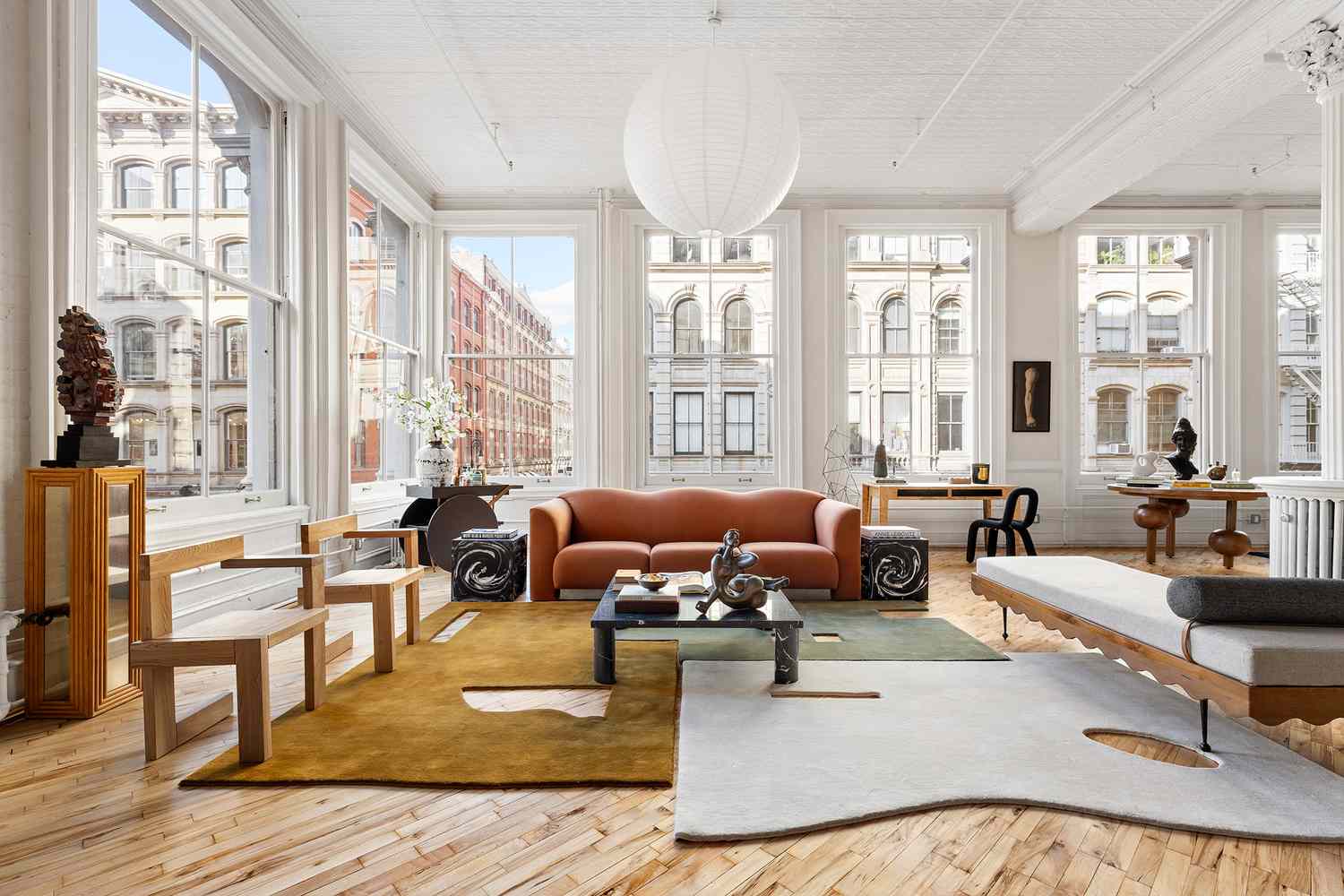
A room with spectacular architecture, an extraordinary view, or a strong piece of artwork may not need another focal point competing for attention. In these situations, a simple shade or understated curtain can provide privacy and light control without distracting from the elements that already make the room special.
This is particularly true when the view outside is part of the interior experience.
A beautiful garden, city skyline, or mature tree can function almost like artwork. The window treatment should frame it rather than compete with it.
Rule #12: Traditional Treatments Belong in Traditional Homes
Perhaps one of the most interesting rules to break is the idea that classic window treatments must belong to period interiors. Traditional details can look incredibly fresh when paired with contemporary furnishings.
A tailored valance can add softness to a modern bedroom. A classic stripe can bring visual interest in a minimalist home. Even custom window valances can feel contemporary when they are made in a restrained fabric and paired with clean-lined furniture.
The secret is contrast.
A traditional treatment surrounded entirely by traditional elements can feel expected. That same treatment against modern furniture, simple lighting, and a restrained palette can suddenly feel unexpected.
The Best Rule Is to Know Why You’re Breaking One
Design rules are useful because they provide a starting point. They help you understand proportion, balance, scale, and visual hierarchy. But once you understand those principles, you have more freedom to interpret them.
Maybe your small room needs a dramatic curtain. Maybe your neutral interior needs a deep charcoal shade. Maybe your asymmetrical windows look better when treated differently. Maybe the traditional valance you thought would never work turns out to be exactly what gives the room character.
The important thing is that the decision should feel intentional.
The best-designed rooms rarely look as though someone followed a checklist. They look as though every element was considered in relation to the architecture, the light, the furniture, and the people who use the space.
So hang the curtains high when it makes sense. Mix patterns when the scales work. Choose color when the room needs it. Layer treatments when they serve a purpose. Leave a beautiful window exposed when hiding it would be a mistake.
And if breaking a decorating rule makes the room look better?
Break it!







Leave a comment