



Let’s start with a confession. Most footwear fails before it should. Not because of rough terrain or heavy use. Because of shortcuts taken at the factory, at the tannery, at the sole press. The good news? Those shortcuts leave traces, and once you know what to look for, you’ll never buy another disposable pair again.
Here’s a buyer’s field guide for those who are tired of replacing shoes every six months
-
Read the Sole Like a Story
Flip any shoe over before you buy it. The sole is the autobiography of its construction.
A split sole or visible seam running the full perimeter signals vulcanised or cemented construction, which tends to delaminate under heat and moisture. A stitched welt (look for a row of tight, even stitching where upper meets outsole) is your best friend. It survives resoling, survives rain, survives decades.
What to look for: Polyurethane or natural rubber outsoles moulded in one piece. Cork footbeds. Leather shanks. These are the quiet hallmarks of the best footwear for men who want function to outlast fashion.
-
Sandals Deserve the Same Scrutiny
There is a persistent myth that sandals are seasonal casualties to be swapped yearly. That myth costs people money.
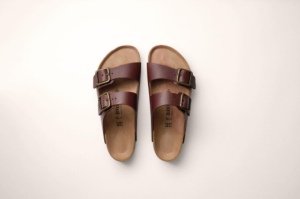
When evaluating sandals for longevity, examine three things: the strap material, the buckle hardware, and the footbed compression. Cheap sandals use pressed synthetic straps that crack within a summer. Quality sandals use full-grain or nubuck leather that softens and moulds with wear.
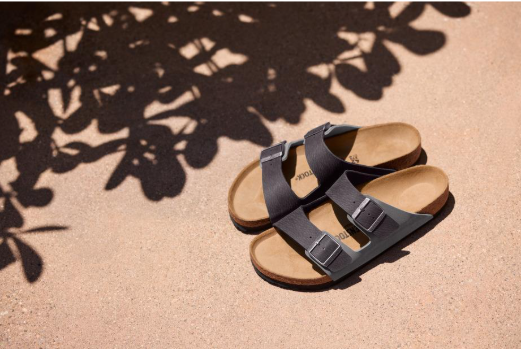
Birkenstock’s Arizona and Gizeh silhouettes, for example, use a two-strap and toe-loop design, respectively, both built on a cork-latex footbed that compresses just enough to imprint the shape of your foot over time.
Premium sandals for men and women should pass this test: press your thumb firmly into the footbed. It should yield gently, not collapse entirely. Resilience is durability made tactile.
-
The Hardware Test Nobody Talks About
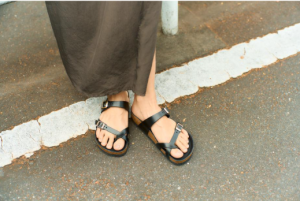
Brass hardware outlasts zinc alloy. Matt finishes hide wear better than chrome. On a quality pair of sandals, the buckle should click with resistance, not rattle loosely on the bar.
Birkenstock’s Mayari and Madrid styles illustrate the contrast well: single-strap and slide constructions where the hardware carries a significant load. When that hardware is solid, and the attachment point is stitched rather than glued, you have a sandal built for multiple summers, not just one.
-
Five Rapid-Fire Checks Before You Commit
- Bend test: Fold the shoe gently. It should resist at the arch, not collapse flat.
- Smell test: Real leather has a faint, clean animal scent. Synthetic smells like plastic or nothing at all.
- Weight test: Heavier is not always better, but hollow lightness often signals foam fillers.
- Stitch count: More stitches per inch means tighter bonding and longer life.
- Country of manufacture: Not a guarantee, but regions with long cobbling traditions (Portugal, Germany, India) consistently deliver higher craftsmanship floors.
-
The Boston Principle
The Boston clog, a closed-toe silhouette with the same cork-latex foundation, represents something worth naming as a principle: the best footwear for men and women often starts as workwear. This silhouette was designed for all-day use by people who could not afford failure. Its DNA is durability.
-
Premium Sandals for Men and Women: What the Price Is Actually Buying
Price is not quality. But below a certain threshold, quality becomes structurally impossible.
At accessible price points, expect machine-cut straps, synthetic linings, and glued construction. Step above that threshold and the variables change: hand-finishing becomes viable, full-grain leather becomes economical, welted construction becomes realistic.
Premium sandals for men and women at a credible price point are not a luxury.
Final Word
The footwear industry profits from replacement cycles. Breaking that cycle requires nothing more than twenty seconds of attention before purchase. Read the sole. Test the footbed. Check the hardware.
Because truly durable footwear does something fast fashion never can: it improves with age. The leather softens, the footbed remembers you, and the creases become personal rather than worn out. A well-made pair should not feel temporary. It should feel like something you’ll reach for years from now without thinking twice.











Leave a comment